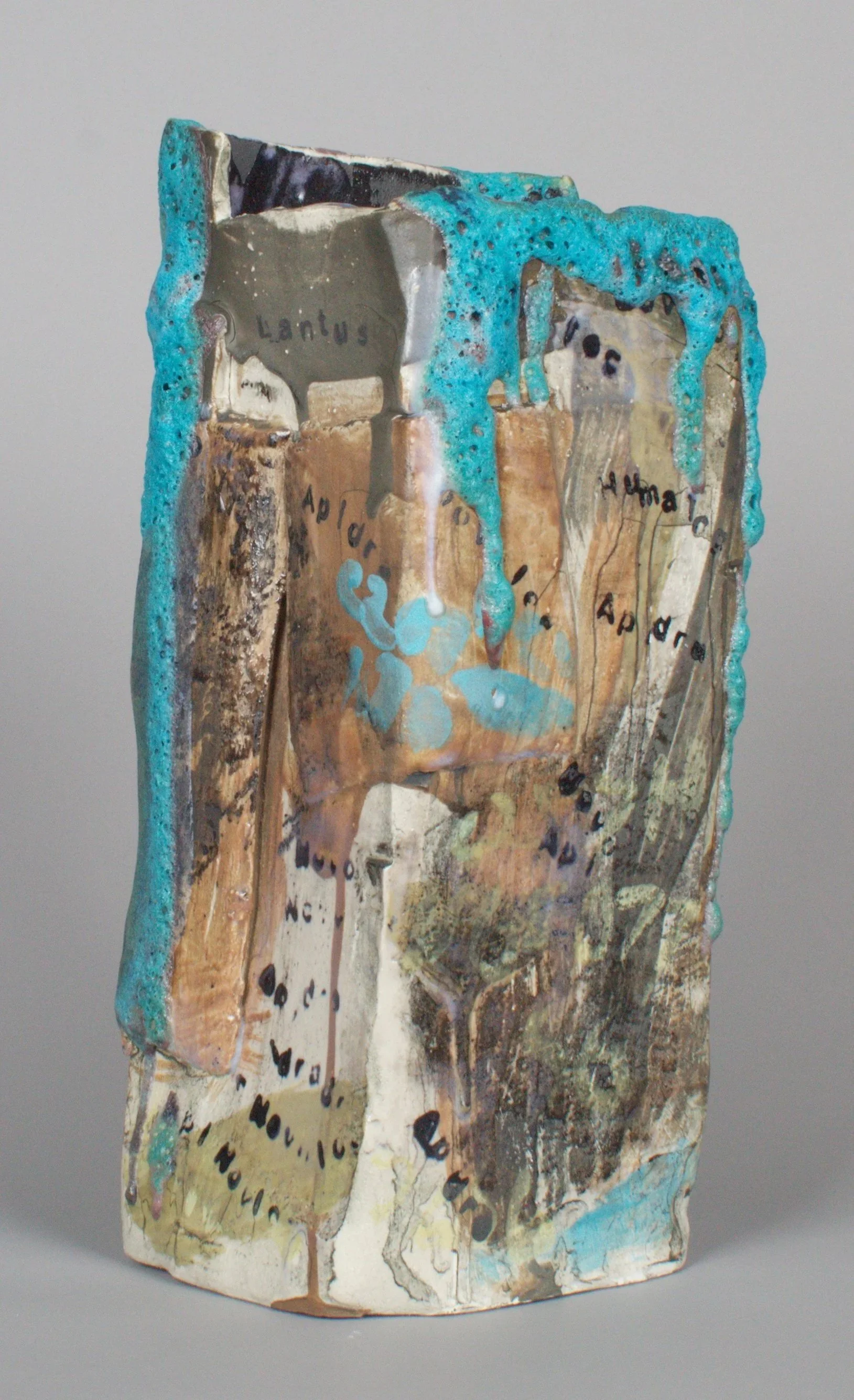
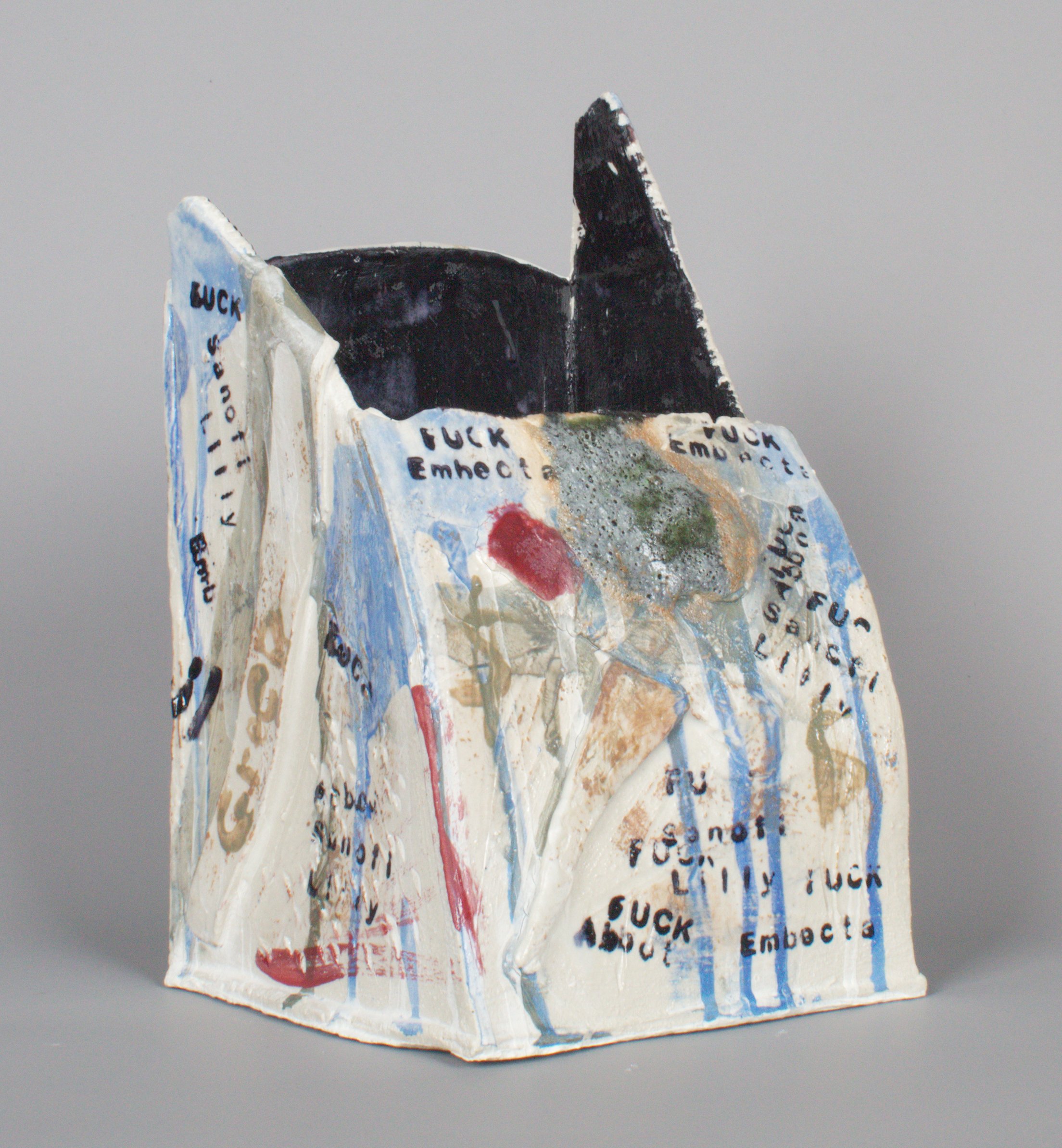
Corporate branding, fractured surfaces, and eruptive glazes collide to expose the political brutality of a healthcare system that profits from diabetic survival.

LLC, 4.5” x 4” x 11”, Ceramics, 2025

Insulin, 6” x 12” x 5.5”, Ceramics, 2025

For Profit, 6” x 10” x 6”, Ceramics, 2025
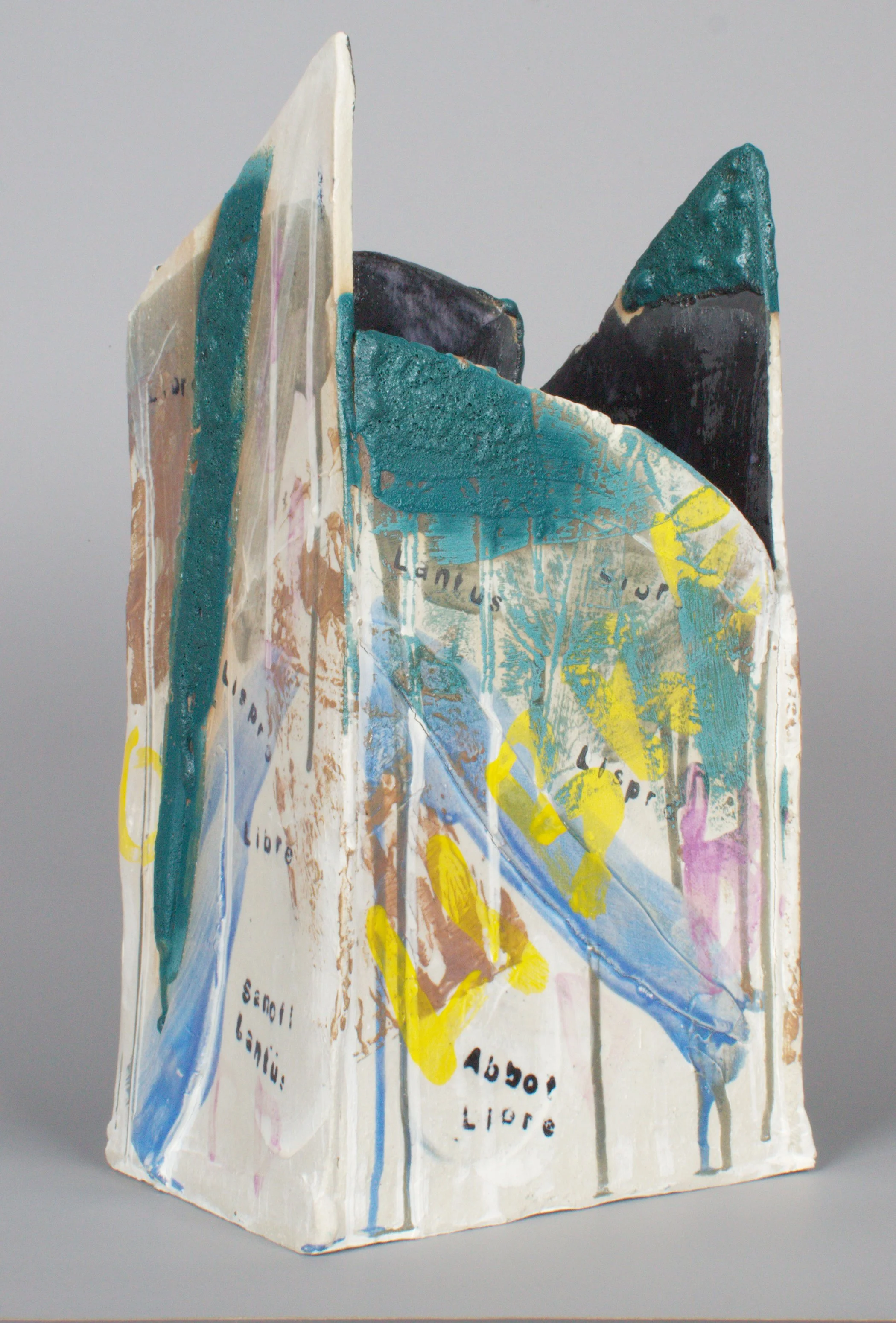
Antibody markers, chaotic alarms, and eruptive crater glazes collide to expose the volatility and unseen daily labor of living with Type 1 Diabetes.

Alarms, 7” x 10”, Ceramics, 2025

IA2 and GAD65, 6.5” x 10”, Ceramics, 2025

LADA 7.5” x 10”, Ceramics, 2025
Fractured self-portraits, disrupted surfaces, and shifting colorization expose the unseen deterioration and quiet volatility of a body collapsing under undiagnosed Type 1 Diabetes.

Untitled #1, 4.5” x 8” x 4.5”, Ceramics, 2024

Untitled #2, 4.5” x 8” x 4.5”, Ceramics, 2024

Untitled #3, 4.5” x 8” x 4.5”, Ceramics, 2024
A collision of antibody markers, glucose data, and eruptive crater glazes, these works expose the unseen labor and daily volatility of living with Type 1 Diabetes.

Antibodies, 4.5” x 4.5”, Ceramics, 2025

Issues, 4.5” x 4.5”, Ceramics, 2025

WDD, 4.5” x 4.5”, Ceramics, 2025
These elongated “watchers,” shaped like abstracted alcohol bottles, embody the ego as a protective ancestral presence—echoing ancient guardians while confronting the pull of addiction. Their simplified faces and Art Brut sensibilities become spiritual signals urging sobriety, reflecting the artist’s search for guidance, change, and self-understanding.

Ego Bottles #1, 20” X 7” X 5”, Ceramics, 2024

Ego Bottles #2, 20” X 7” X 5”, Ceramics, 2024

Ego Bottles #3, 20” X 7” X 5”, Ceramics, 2024
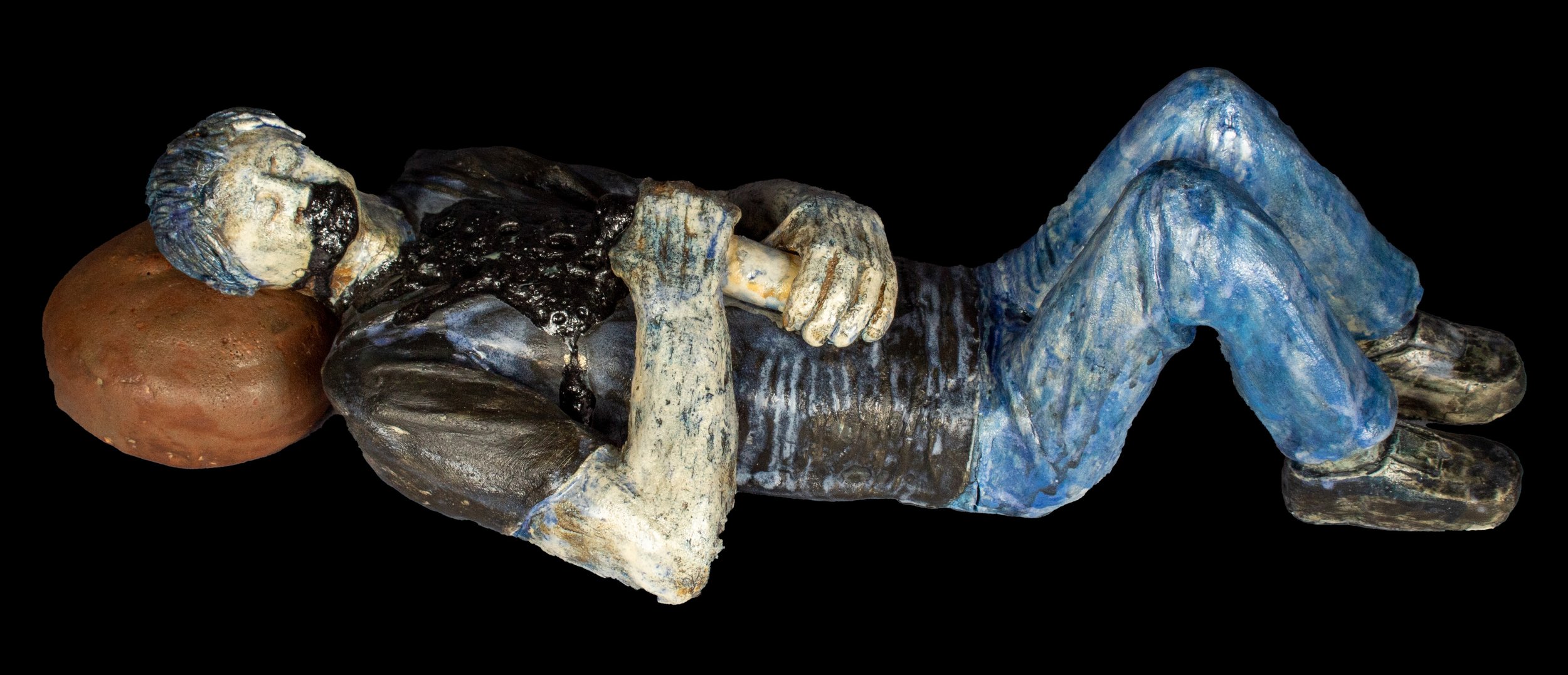
These figures, rendered with sickly, poison-tinged skin, capture moments from the artist’s drunken past—ranging from quiet contemplation to collapse—embodying the physical and emotional impact of alcohol on the body. Their varied poses become visual memory fragments, inviting reflection on addiction, vulnerability, and the lingering traces of a life once shaped by drinking.

Drunk Moments: Contemplation, 10” X 7” X 4”, Ceramic, 2024

Drunk Moments: Sorrows be gone, 10” X 7” X 4”, Ceramic, 2024

Drunk Moments: Time Traveling, 17” X 5” X 3”, Ceramic, 2024


These jarred sculptures—ranging from decomposing heads to infant hybrids—use the language of scientific specimens and Cabinets of Curiosities to present the body as something preserved, distorted, and exposed for study. Through their unsettling forms and suspended states, the works explore our fascination with the grotesque and confront the viewer with the fragility, strangeness, and impermanence embedded in the human condition.
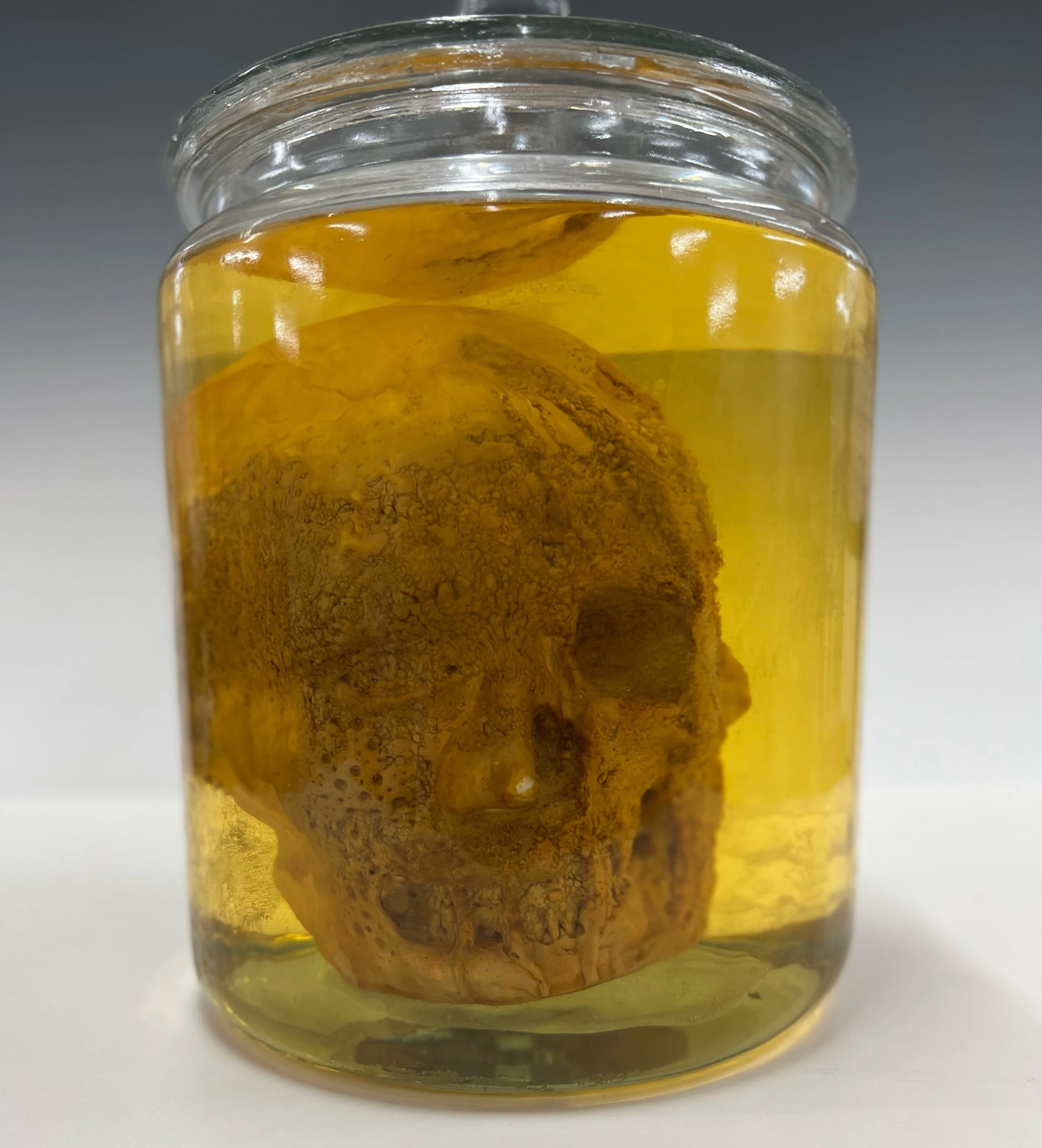
Rot and Cookies series, Glass, oil, and plaster, 12” x 9” x 9”, 2022.

Specimen: Jeremiah, hot vinyl melt, glass and paper, 10.5” x 6” x 6”, 2020.

Specimen: Jacob, hot vinyl melt, glass and paper, 10.5” x 6” x 6”, 2020.
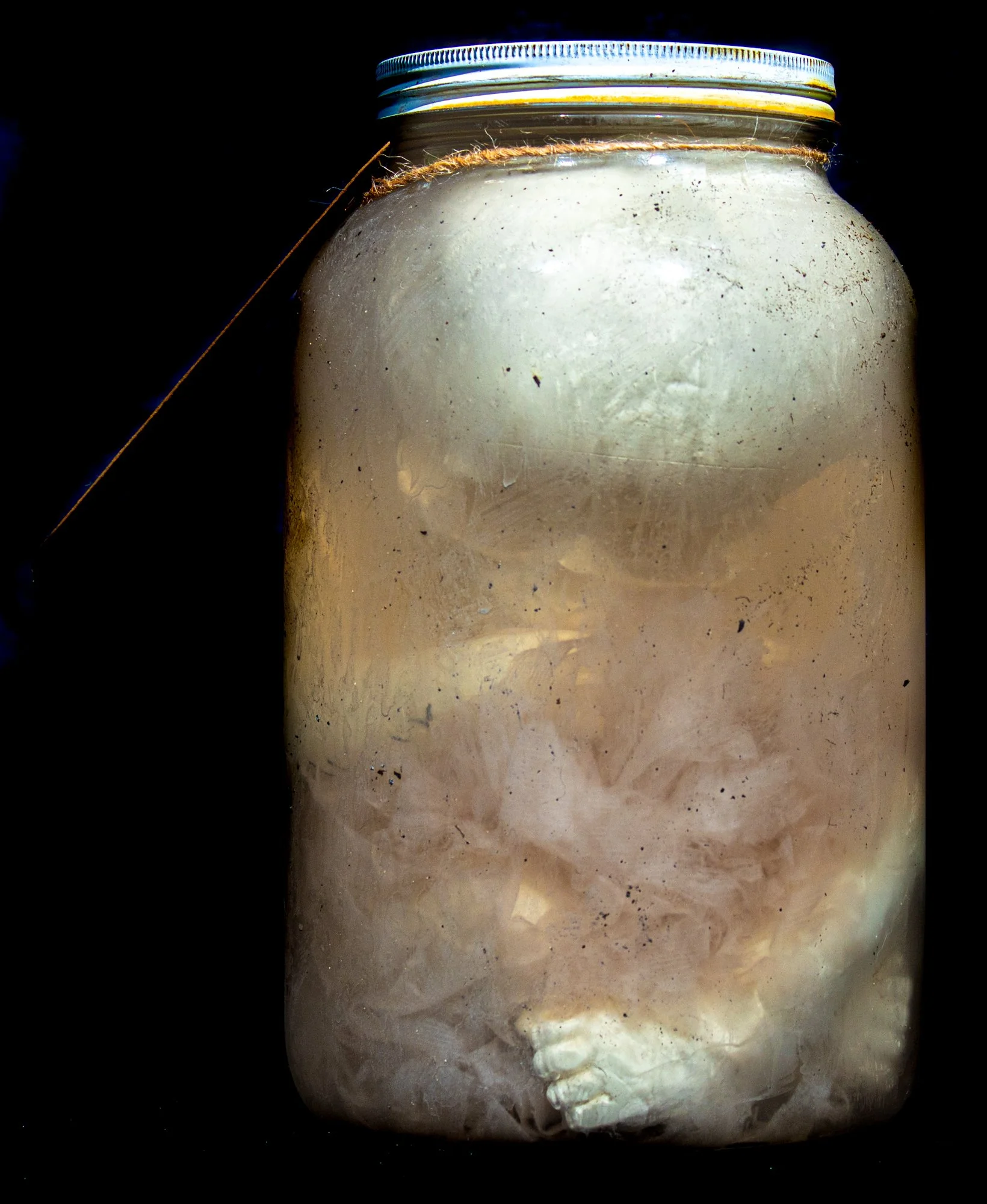
Specimen: Jonah. hot vinyl melt, glass and paper, 10.5” x 6” x 6”, 2020.

Specimen: Josh, hot vinyl melt, glass and paper, 10.5” x 6” x 6”, 2020.
These violently altered ceramic heads—marked by ballistic impact, crater glazes, and deliberate structural fractures—embody the physical and psychological ruptures of trauma, echoing the lingering effects of Adverse Childhood Experiences and generational wounds. By pairing Art Brut–inspired forms with destructive processes, the sculptures create space for confronting mental health, gun violence, and the enduring imprint of childhood damage on the adult body and mind.

Shells, Seeds and PTSD #1 (ACE series), 7” x 8” x 8”, Ceramics, 2023
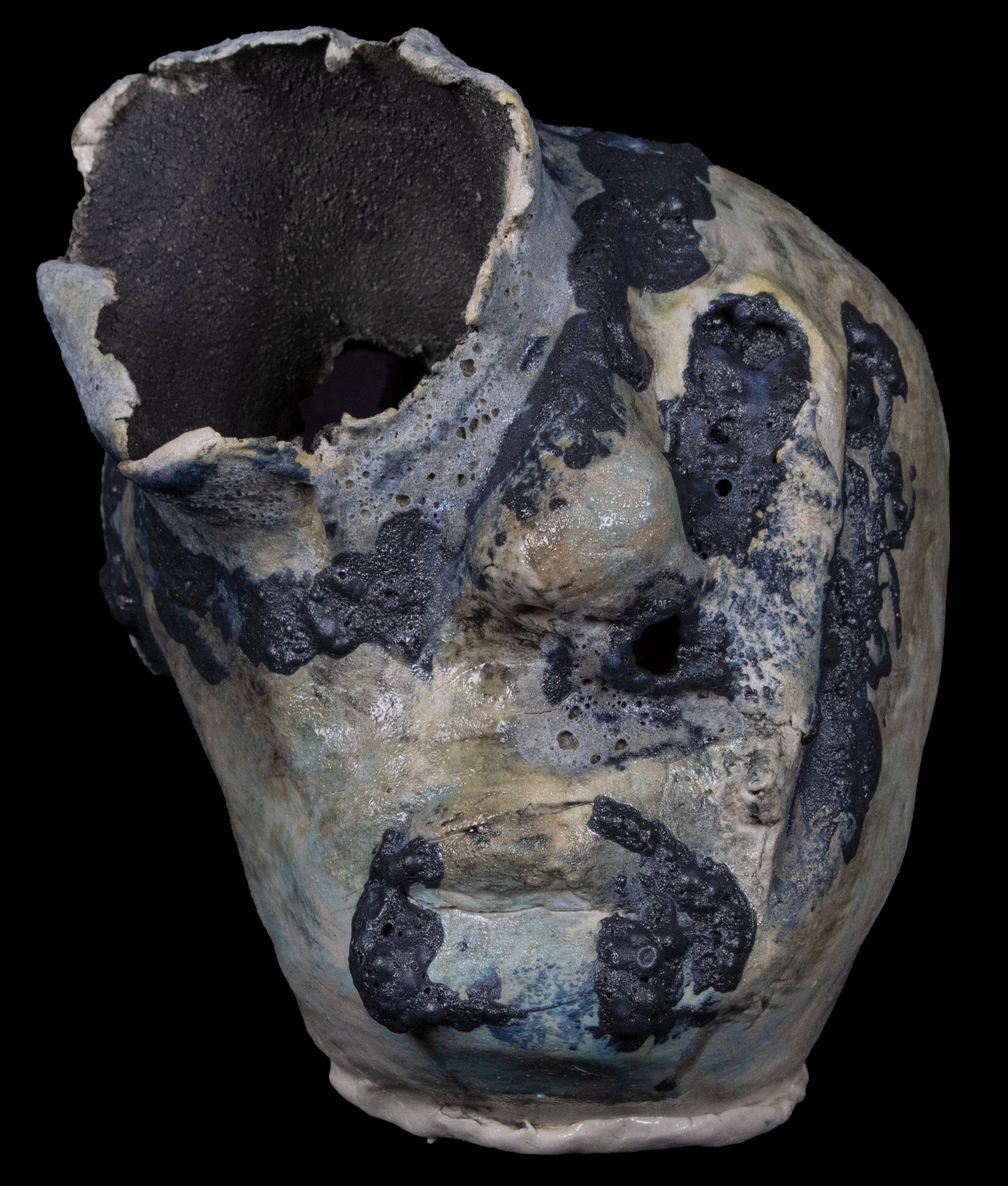
Shells, Seeds and PTSD #2 (ACE series), 7” x 8” x 8”, Ceramics, 2023

Shells, Seeds and PTSD #3 (ACE series), 7” x 8” x 8”, Ceramics, 2023

Shells, Seeds and PTSD #4 (ACE series), 7” x 8” x 8”, Ceramics, 2023

Shells, Seeds and PTSD #5 (ACE series), 7” x 8” x 8”, Ceramics, 2023

Shells, Seeds and PTSD # 6 (ACE Series), 10 x 10 x 7, Ceramic, 2023.

Shells, Seeds and PTSD # 7 (ACE Series), 9 x 10 x 6, Ceramic, 2023.

Shells, Seeds and PTSD # 8 (ACE Series), 8 x 6 x 5, Ceramic, 2023.

Shells, Seeds and PTSD # 9 (ACE Series), 8 x 8 x 7, Ceramic, 2023.

Shells, Seeds and PTSD # 10 (ACE Series), 7 x 6 x 7, Ceramic, 2023.

Shells, Seeds and PTSD # 11 (ACE Series), 7 x 5 x 5, Ceramic, 2023.

Shells, Seeds and PTSD # 12 (ACE Series), 10 x 8 x 6, Ceramic, 2023.
This series was partially funded by Fort Hays State University Graduate Scholarship Experience grant program.
This figure, marked by cratered surfaces and an exposed, eroded brain, visualizes the neurological damage caused by alcoholism—echoing Brain SPECT scans that reveal diminished blood flow, memory loss, and the slow death of the mind. By muting sight and voice and letting the body take on the texture of weathered stone, the sculpture confronts the viewer with the physical and psychological deterioration tied to addiction.

Alcohol and Dementia #1 (Brain Spect Scan Series), 13 x 13 x 10, Ceramic, 2023.

Alcohol and Dementia #2 (Brain Spect Scan Series), 13 x 13 x 10, Ceramic, 2023.

Alcohol and Dementia #3 (Brain Spect Scan Series), 13 x 13 x 10, Ceramic, 2023.
This cast female figure carries the emotional weight of childhood punishment, her marked surface and shifting colors reflecting the moods, memories, and lasting psychological impact of Adverse Childhood Experiences. By presenting the body as both vulnerable and expressive, the sculpture opens a conversation about mental health, physical abuse, and the formative experiences that shape who we become.

Punishments #1 (ACE series), 13” x 13” x 10”, Ceramics, 2023

Punishments #2 (ACE series), 13” x 13” x 10”, Ceramics, 2023

Punishments #3 (ACE series), 13” x 13” x 10”, Ceramics, 2023
These elongated, abstracted, and sometimes eerily realistic figures visualize the disorientation, sickness, and internal fragmentation shaped by Alcohol Use Disorder, drawing on imagery of blackout states, spaghettification, and ancestral watchers to embody the shifting faces of ego and addiction. Carved surfaces, jaundiced stains, and cratered textures echo the body’s deterioration while revealing the artist’s struggle toward healing, reflection, and self-recognition. Together, these works form a vulnerable exploration of identity and mental health, inviting viewers to witness the tension between temptation, collapse, and the slow emergence of recovery.


These abstracted figures visualize the shells we construct in response to childhood trauma, their sharp textures, layered slips, and eruptive surfaces embodying the wounds, defenses, and psychological weight of Accrued Childhood Experiences. Through their ambiguous, faceless forms, the sculptures invite viewers to confront mental health, dissociation, and the lingering impact of early harm on the shaping of the self.

Calloused (ACE series), 16” x 10” x 10”, Ceramics, 2023

Dripper (ACE series), 16” x 10” x 10”, Ceramics, 2023

Dump (ACE series), 16” x 10” x 10”, Ceramics, 2023
These Krampus masks reinterpret the Alpine folklore figure as a vessel for exploring fear, morality, and the monstrous aspects of human nature, blending traditional forms with the artist’s own sculptural language. Carved, cast, and embellished surfaces heighten their snarling presence, inviting viewers to confront the boundary between playful myth and the darker impulses that haunt the imagination.

Krampus Cage, Wood, Goat horns, hide, horsehair, and resin teeth, 14” x 10” x 7”, 2022

Krampus, bronze, 10” x 9” x 7”, 2019.

Frampus, I like sweets instead of kids, Bronze, 11” x 10” x 7”, 2020

Krampus (Wall), Walnut, 18” x 10” x 2”, 2023
These masks merge cratered, volatile glaze surfaces with muted, ghostlike features to evoke emotions that shift, collide, and erode beneath the skin. Their ruptured textures suggest the pressure of internal states surfacing—brief flashes of feeling made material, fragile, and exposed.

Anger/Disgust (ACE Mask Series), Phenomena Ceramics, 10” x 7” x 3.5”, 2023

Anger/Sadness (ACE Mask Series), Phenomena Ceramics, 10” x 7” x 3.5”, 2023

Anxiety/Wonder (ACE Mask Series), Phenomena Ceramics, 10” x 7” x 3.5”, 2023

Disgust/Anger (ACE Mask Series), Phenomena Ceramics, 10” x 7” x 3.5”, 2023

Grief/Terror (ACE Mask Series), Phenomena Ceramics, 10” x 7” x 3.5”, 2023

Joy/Surprise (ACE Mask Series), Phenomena Ceramics, 10” x 7” x 3.5”, 2023

Surprise/Joy (ACE Mask Series), Phenomena Ceramics, 10” x 7” x 3.5”, 2023

Surprise/Sadness (ACE Mask Series), Phenomena Ceramics, 10” x 7” x 3.5”, 2023

Terror/Grief (ACE Mask Series), Phenomena Ceramics, 10” x 7” x 3.5”, 2023

Wonder/Anxiety (ACE Mask Series), Phenomena Ceramics, 10” x 7” x 3.5”, 2023
This series was partially funded by Fort Hays State University Graduate Scholarship Experience grant program.
These expressive masks embody a spectrum of emotions—anger, grief, joy, disgust, anxiety, and wonder—blurred together in distorted faces that mirror the artist’s shifting personas. Color-coded glazes and black shadowed orifices reveal the psychological pressures of lived experience, drawing on Jungian archetypes to visualize the tension between the self and its hidden, unconscious depths.

Anger and Disgust (Personas and the Shadow series), Glazed Ceramics with copper oxide wash, 10” x 7” x 3.5”, 2022.

Anger and Sadness (Personas and the Shadow series), Glazed Ceramics with copper oxide wash, 10” x 7” x 3.5”, 2022.

Anxiety and Wonder (Personas and the Shadow series), Glazed Ceramics with copper oxide wash, 10” x 7” x 3.5”, 2022.

Disgust and Anger (Personas and the Shadow series), Glazed Ceramics with copper oxide wash, 10” x 7” x 3.5”, 2022.

Grief and Terror (Personas and the Shadow series), Glazed Ceramics with copper oxide wash, 10” x 7” x 3.5”, 2022.

Joy and Surprise (Personas and the Shadow series, Glazed Ceramics with copper oxide wash, 10” x 7” x 3.5”, 2022.

Sadness and Surprise (Personas and the Shadow series), Glazed Ceramics with copper oxide wash, 10” x 7” x 3.5”, 2022.

Sadness and Anger (Personas and the Shadow series), Glazed Ceramics with copper oxide wash, 10” x 7” x 3.5”, 2022.
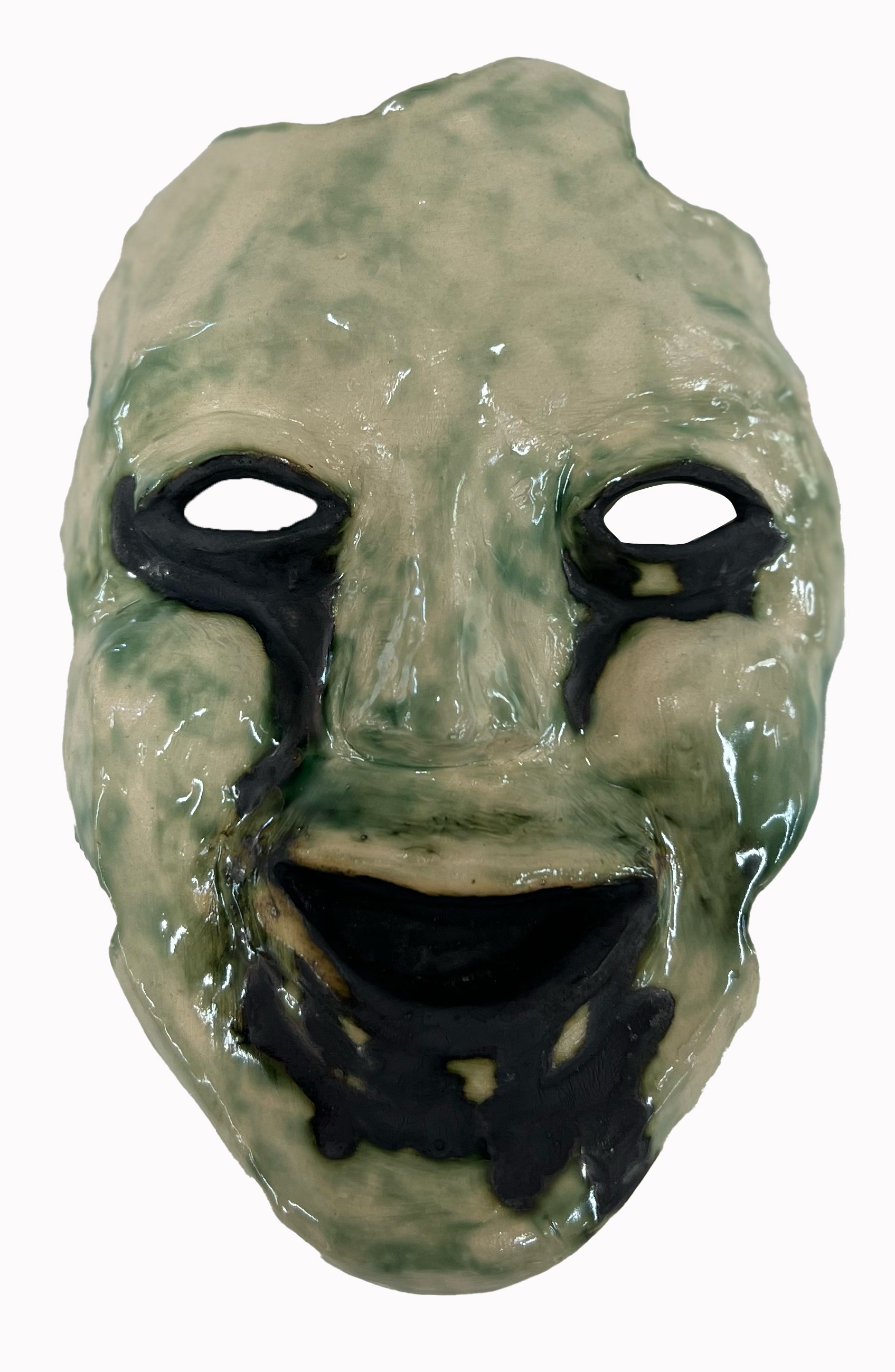
Surprise and Joy (Personas and the Shadow series), Glazed Ceramics with copper oxide wash, 10” x 7” x 3.5”, 2022.

Terror and Grief (Personas and the Shadow series), Glazed Ceramics with copper oxide wash, 10” x 7” x 3.5”, 2022.

Wonder and Anxiety (Personas and the Shadow series), Glazed Ceramics with copper oxide wash, 10” x 7” x 3.5”, 2022.
These fractured clay faces bear the marks of rupture and repair, echoing the quiet violences that shape a life. Their cracked surfaces and burned seams become evidence of endurance, holding together what experience has tried to pull apart.

Tearing apart (Fractured series), Ceramic with copper oxide wash, 7” x 3.5” x 2”

Damaged goods (Fractured series), Ceramic with copper oxide wash, 7” x 3.5” x 2”

Scarred by Experience (Fractured series), Ceramic with copper oxide wash, 7” x 3.5” x 2”
These bronze masks, with their corroded patinas and eroded features, evoke ancestral memory, mortality, and the shifting identities we carry beneath the surface. Their weathered surfaces blur the line between living presence and archaeological relic, inviting viewers to confront the body’s transformation over time and the stories cast into metal.

Death (Carnival Mask series), Bronze, 8”x5”x2.5”, 2020.

Eyemouth (Carnival Mask series), Bronze, 9” x 5” x 4”, 2020.

Scarface (Carnival Mask series), Bronze, 7” x 5” x 4”, 2020.
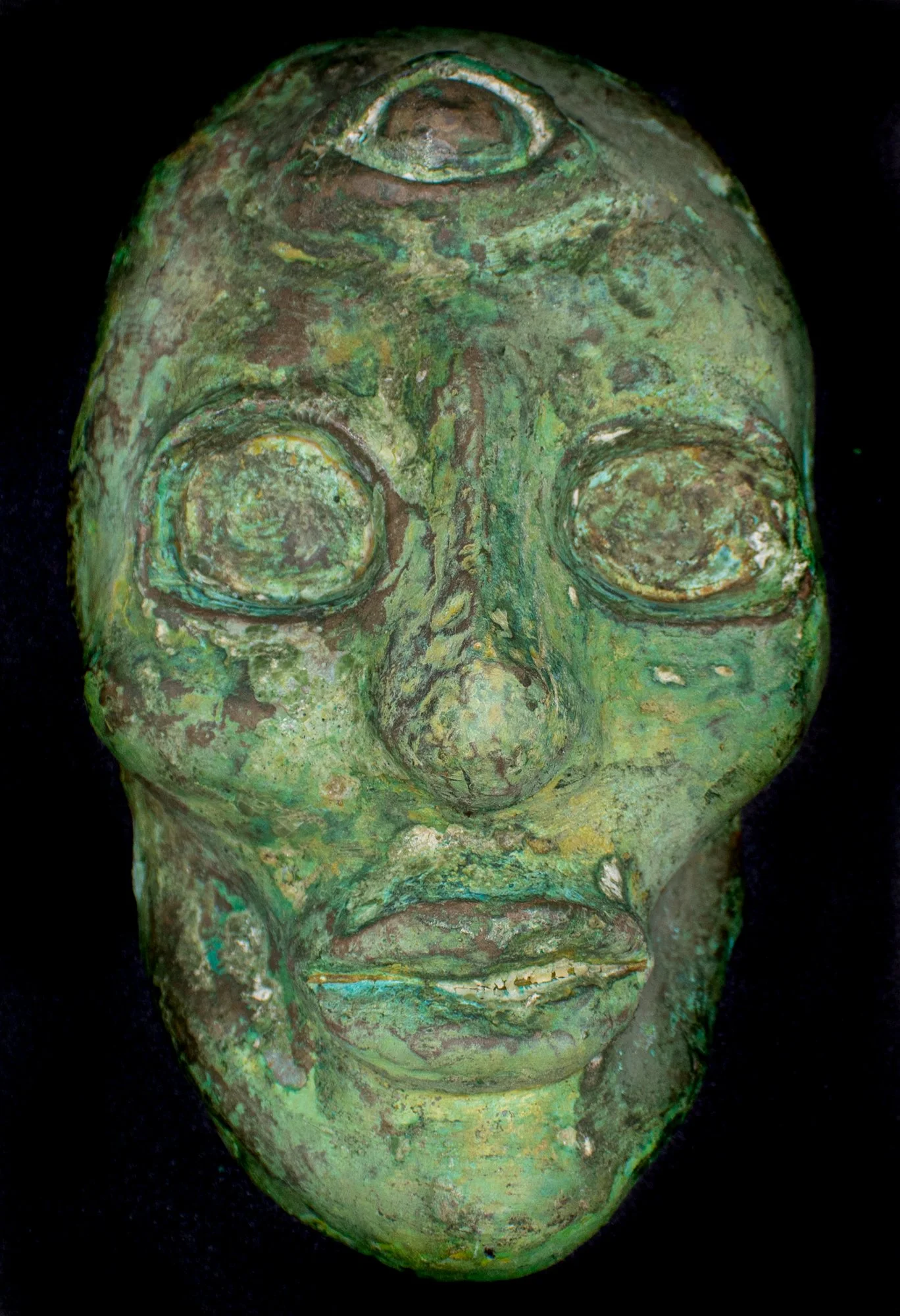
Third Eye (Carnival Mask series), Bronze, 8” x 5” x 4”, 2020.
These assemblages of pill bottles and test tubes—filled with miniature bodies, fragments, and symbolic stand-ins—transform medical containers into metaphors for dependency, identity, and the systems that attempt to regulate our well-being. By presenting what should heal as something unsettling and overpopulated, the works question how medication, trauma, and care intersect, revealing the fragile balance between treatment, control, and the human lives held within these vessels.

Serviced #1, Mixed Media, 4” X 16.75” X 13.5”, 2021.

Populated #1, Mixed Media, 4” X 16.75” X 13.5”, 2021.

Serviced #2, 14” x 18” x 7”, Mixed Media, 2023

Populated #2, 13” x 18” x 4”, Mixed Media, 2023

Medicated, Mixed media, 10” X 36.5” X 15”, 2021.

This piece blends sacred imagery with materials associated with the body, creating a tension between innocence, ritual, and the unspoken pressures that shape belief. Through its unsettling contrasts, the work reflects on the lingering anxieties inherited from early spiritual environments and invites viewers to consider the quiet violences embedded in tradition.

#Saved, Mixed Media, 4” X 13” X 21”, 2021.